By Mark Goldring, Director
Finding an affordable house for 11 people in a crowded and expensive city was no mean feat, one that reflects well on the efforts of county and city councils, the Methodist Church who are the landlord, and Asylum Welcome, who provide the support.
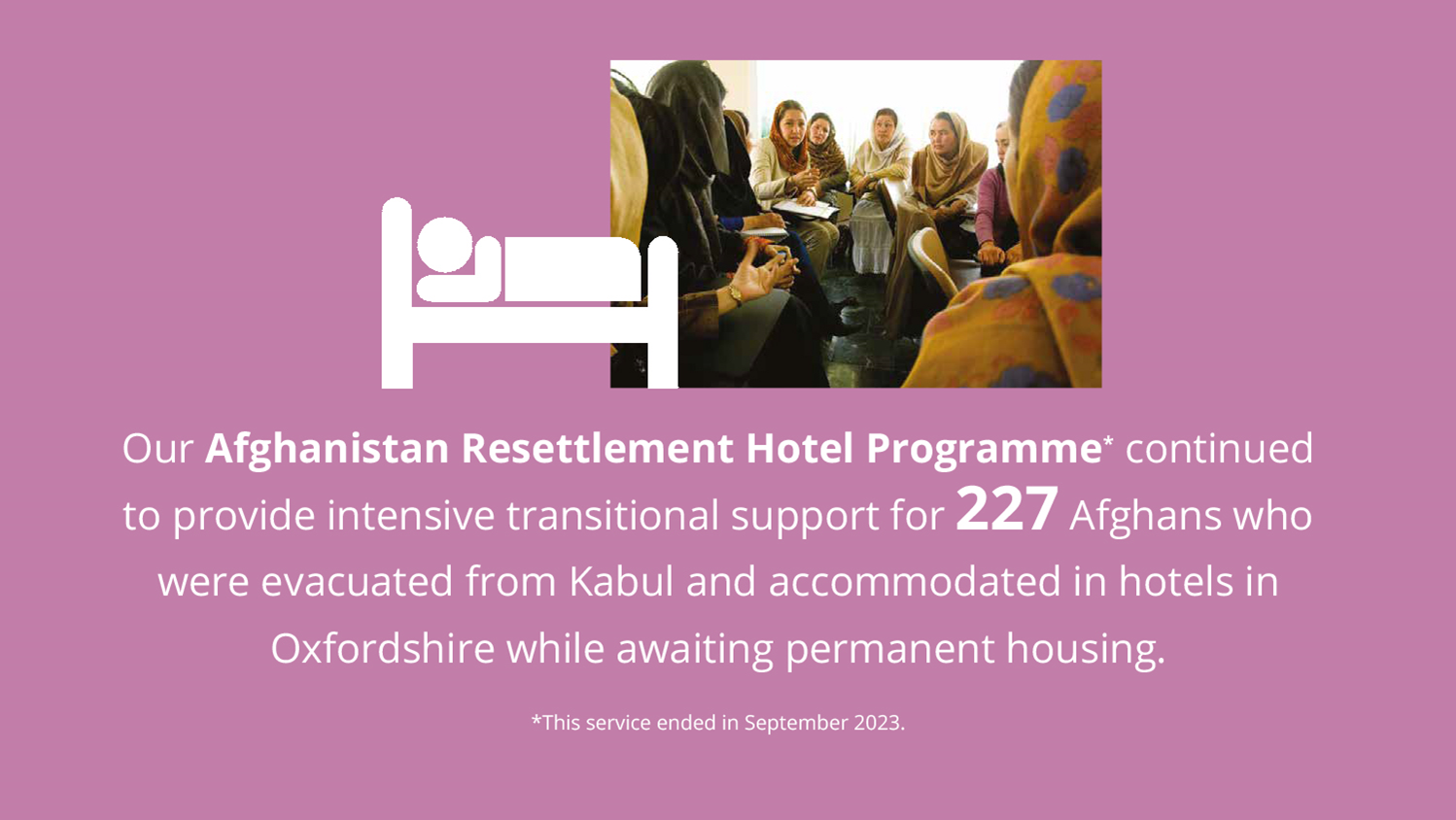
This family were among over 15,000 people evacuated from Afghanistan to the UK following the Taliban takeover in August 2021. Nearly two years later, the government announced that the hotels still housing many of the asylum seekers would close at the end of August. At that time, there were still 9,000 individuals living in hotels across the UK, nearly 200 of whom were in two Oxfordshire hotels. Although progress has been slow, all of them have now either moved into long-term housing or have an identified house to go to in the near future. This progress is a tribute to local councils and those working with them, assisted by recently increased support from central government. When I joined the ‘move-on’ celebration at the hotel in Thame, proud parents showed me pictures of the houses they would be moving into in the coming weeks.
Asylum Welcome’s hotel support programme has now closed. It has been one of our biggest-ever programmes. We immediately helped with induction, registration, language and practicalities, but then gradually helped people into education, work and their own houses. Beyond our own efforts, we have admired the ways that schools, health services, community groups, and religious groups have gone the extra mile to include and support local Afghan residents. It hasn’t always been simple or straightforward, and move-ons have been slow, but overall, it has been a positive story of local collaboration.
That isn’t true everywhere. Across the country, too many Afghans have been moved out of hotels into unsuitable temporary accommodation. They will have struggled to find affordable accommodation and to navigate the challenges of the housing rental market in the months before the deadline, and without the support that those in Oxfordshire have received. Because of these barriers, some will have presented as homeless to local social services.
Many Afghans at risk from the Taliban who met the original criteria to come to the UK were not able to get to the airport or board the flights. Many went into hiding in fear for their lives, and only a tiny number of them have reached the UK in the last two years. Some still live in fear in Afghanistan. Some struggled to short-term safety, but not security, in Pakistan. Others set off in search of sanctuary further afield. The Refugee Council reports that, in the last year, less than a hundred Afghans have been brought to the UK through official routes. Those left behind would understandably feel betrayed.
Meanwhile, in same period, 8,500 Afghans felt no option but to journey across Asia and Europe and cross the channel in small boats. That means that Afghans account for one-in-five of all boat passengers, and 90 people arrive ‘illegally’ for every new one who was officially resettled. The overwhelming majority of asylum claims for these so-called ‘illegal’ Afghans will eventually be accepted, however much our government wants to see these asylum seekers gone, or having never arrived in the first place.
For those who do eventually make it here by boat, the situation is much less supportive than for those who are officially resettled. We see hundreds struggling in four hotels around Oxfordshire as the wait for a decision on their asylum application gets ever longer, despite the fact that the new ‘Streamlined Questionnaire‘ should speed things up. We see constant and well-evidenced complaints about inedible food and unhygienic premises, pregnant women and new mothers without adequate nutrition, people struggling to get around and make any kind of life on £9-a-week, bored and not allowed to work. We see charities, our own included, struggling to support residents to meet their basic needs, live with dignity and access the legal aid that they are entitled to, with no help from central or local government. And we see constant pronouncements from Westminster seeking to make the environment tougher and more hostile.
Most recently we have seen residents, whose asylum claims were submitted long ago, receiving notices of transfer to the Bibby Stockholm barge, only for this to be put on hold at the last minute for immediate safety reasons. These residents know the postponement is only that, and they wait with trepidation for the next Home Office edict. We have seen more of the people who are granted asylum moved on with even shorter notices, sometimes only a week, with no time to make arrangements. They start their stay as official UK residents homeless. Based on recent experience, the next edict will be one that makes headlines for being tough, but which has no impact at all on whether people will risk their lives to reach the UK.
The immediate response to the Afghan crisis in 2021 and the best of what we have done since shows what we can do as part of creating a fair and humane refugee and asylum system . . . if we want to. But try telling that to the Afghans having to pay a fortune to smugglers on the French coast. Asylum isn’t about being legal or illegal. It is about human rights.
