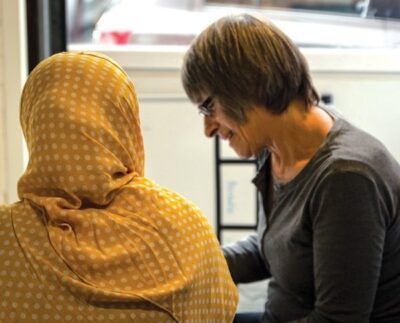
At Asylum Welcome, we support many women, though people may not realise this. We work with women who are navigating the asylum system while also caring for children, rebuilding their lives after trauma, and trying to make sense of a complex and often confusing new country.
For this blog, we spoke to three of our staff who work particularly closely with women refugees, asylum seekers and vulnerable migrants.
- Beth coordinates support for women and families living in asylum accommodation,
- Claire is part of the outreach team running weekly drop-ins and providing practical advice,
- Suhaila supports women refugees to access education and employment and advocate for themselves and their families.
This International Women’s Day we wanted to highlight their work.
We asked them about the challenges women face in the asylum and immigration system, the support we provide, and the moments that encourage them personally as women working in a very challenging environment.
Working alongside women every day
Beth and Claire’s work centres on supporting women and families living in hotel accommodation.
These women include mothers with young children, single mothers, teenage girls and young women in their late teens and early twenties. For many families, hotel accommodation means living in a single room, sometimes for months or even years.
Being a parent in the asylum system brings its own pressures.
The women in asylum hotels have no access to cooking facilities. Families are provided with meals at fixed times, leaving little flexibility around diet, children’s preferences or culturally appropriate food.
“For families with children who don’t want to eat the hotel food, mealtimes can become a battleground,” Beth says.
Claire also highlights the barriers women face in accessing support. Something as simple as owning a phone can determine whether someone can apply for asylum support (£9.95 per person per week). Without one, completing the necessary applications becomes far more difficult.
Many women are also understandably nervous about leaving accommodation or navigating unfamiliar places with limited English.
“Sometimes we’re just helping someone build the confidence to go to the library,” Claire says. “Or showing them where things are in the town.” Those small steps can make a huge difference.
Navigating daily life in the asylum system
Claire helps run a weekly drop-in where women can ask questions and get help navigating practical issues in the asylum system.
With no playroom in the hotel, the drop-ins also give children a chance to see friends and play with toys and activities brought in by Asylum Welcome.
“The questions we get range from the simple things to much more complicated issues,” Claire says.
“Understandably, the women I work with often have no idea how the system works or of their entitlements. Advice from us can make a huge difference to their daily lives.”
“For instance, pregnant women in the asylum system are meant to receive a small weekly uplift in financial support but they need to know this first. “
Asylum Welcome staff and volunteers help expectant mothers understand the healthcare and financial support they are entitled to, advocate for supplementary food where possible, and guide women through a system that many find confusing. Yet the support available remains very limited. Financial assistance increases by just £3 a week during pregnancy, which does little to meet the increased nutritional needs of expectant mothers.
As Beth explains, all pregnancies in asylum accommodation are treated as high risk. There is almost no breastfeeding in the hotel, as the diet provided is not sufficient to support it, and many women are forced to rely on the formula supplied there. “They have so little autonomy in all aspects of their lives,” she says.
Challenges are often invisible
Both Beth and Claire say that the experiences of women seeking asylum are often invisible in public discussion.
Many of the women they meet have experienced rape, trafficking, modern slavery, domestic abuse or other forms of gender-based violence, in addition to the war or persecution that forced them and their families to flee their countries.
During their journeys, women are frequently exposed to further risks.
“Sexual violence is extremely common on migration routes,” Beth says. “A large majority of our clients will have experienced sexual violence, often used as a ransoming tool.”
When women reach the UK, the practical challenges can feel overwhelming. One such challenge is the asylum interview where they are asked to recount in detail the circumstances that forced them to flee their homes.
“These interviews are incredibly important, but they can also be very retraumatising.” says Beth. Even getting to the interview can be difficult. Some women may have PTSD, may not be literate, and/or may be travelling alone for the first time.
“The Home Office has no system to support people with those extra vulnerabilities.”

“If there are women living in these situations and our systems are making their lives harder,” Beth says, “we have to question our commitment to gender equality.”
What needs to change
Beth believes many of the challenges faced by women in the asylum system reflect wider inequalities.
“Patriarchy is global,” she says. “Many of the women we work with love their culture and their communities. What they struggle against is the same thing women everywhere struggle against — inequality and control.”
At the same time, she says the UK’s immigration system can make life even harder for them.
Restrictions such as “No Recourse to Public Funds” (NRPF) can mean that some women fleeing domestic abuse are unable to access the same support services available to others, solely because of their immigration status.
Beth also worries that proposed “earned settlement” rules could disproportionately affect women. If permanent residence depends on earning a minimum income for several years, many women — particularly those with caring responsibilities — may struggle to qualify.
Unlocking potential
Suhaila’s work in the resettlement programme focuses on helping refugee women access education, English classes and employment opportunities.
Working alongside women at Asylum Welcome, she says, has been a real education for her too.
“Many of the women we support have never had the opportunity to learn to read or write, even in their own language,” she explains. “When they arrive in the UK, they may be encountering formal education for the first time.”
Part of her role is ensuring women are included in decisions about their own lives.
“In many families the man is the public face of the household,” she says. “Letters from official services are addressed to him. Benefits may be paid into his account. Men’s education and employment is prioritised.”
“Even in the UK where women have the same rights on paper, they don’t always have the same opportunities especially when there are children to care for. Refugee women don’t have the same chances to attend classes or build confidence outside the home. “
But when women do gain access to learning, the change can be remarkable.
Women who begin learning to read and write in what may be there second or third language often progress with extraordinary determination. Many also bring valuable skills that are not always recognised when they arrive — sometimes not even by the women themselves — such as managing large households, navigating complex family dynamics, multitasking constantly, making their own clothes, and preparing nourishing meals with very limited resources.

“Many of the women I work with are incredibly talented and quick to learn,” Suhaila says. “Sometimes they have simply never had the chance to show it.”
Moments that make the work worthwhile
“When people get their status and know they are safe from being returned, it’s an incredible moment,” says Claire. “They are always so excited to tell us.”
For Beth, the moments that stand out often come earlier, when trust begins to grow.
“Many of the women we work with have been let down by systems or by people in positions of authority,” she says. “So, naturally, earning their trust takes time. But once that trust develops, something shifts. You start to see humour again. Moments of levity. That’s really special.”
Suhaila also remembers small but powerful steps forward.
One woman she worked with had been caring for her husband, who has learning difficulties. She was extremely anxious about leaving the house.
A volunteer began accompanying her to an English class. One day she arrived by herself.
“Seeing her walk in independently was incredibly moving,” Suhaila says.
Women supporting women
Despite the challenges they face, Beth, Claire and Suhaila say they are continually struck by the strength and solidarity among the women they work with.
Friendships form across nationalities and cultures, and women look out not only for each other but for each other’s children.
“At the drop-ins, the children are excited to see each other and play together,” Claire says.
For Suhaila, the atmosphere in the bi-monthly women’s group she runs can be especially powerful.
“Sometimes everyone is cooking, sharing food, dancing and playing music from their different cultures,” she says.
“We see incredible resilience and mutual support,” Claire adds.
“Women from different countries and backgrounds build friendships and support each other. It’s an amazing thing to witness, and we feel very grateful to be part of that.”
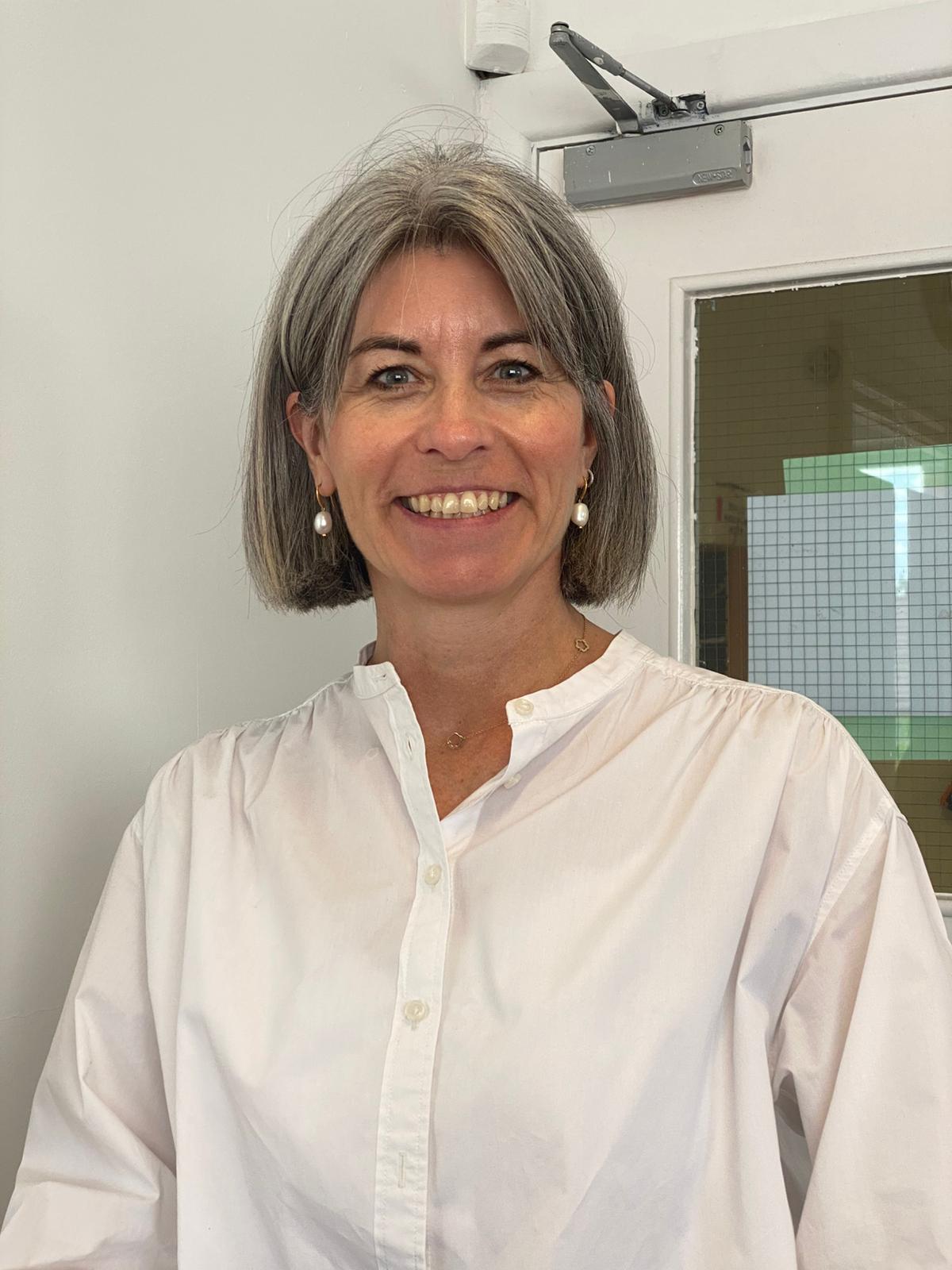
“Even in very difficult circumstances, women support each other,” Claire says. “They translate for one another, go to appointments together, share advice.”
The need for more support
All three staff members say that with more resources, there are many ways in which Asylum Welcome’s support for women could grow.
Suhaila is keen to expand the women’s group but is conscious that practical barriers often mean that women who would really benefit from groups, classes or social activities simply cannot attend.
Transport, in particular, can be a major barrier to taking part in activities or accessing support. Many refugee women rely on buses and often travel with multiple children in tow. Even getting to a group or class can be difficult and expensive, especially if the women are living in Witney or Banbury and the class is in Oxford. It can feel intimidating to travel alone, especially after dark. Suhaila knows many women who would love the chance to learn to drive, seeing it as a way to gain independence and confidence in their daily lives, yet the cost of lessons puts this out of reach for most families.
Childcare is another challenge. Many women have very little opportunity to focus on their own learning or development because they are constantly caring for young children. Even during English lessons, several children may be in the room needing their mothers’ attention. Having a childminder and activities for children while the class takes place could make a big difference.
Vocational training could also unlock the skills many women already possess. For example, one woman in Suhaila’s group was teaching others how to create sewing patterns, but she did not have access to a sewing machine. Small investments in equipment could allow women to develop their skills further and potentially teach others.
And when women can develop their confidence and abilities, the impact extends far beyond the individual. Families are strengthened, friendships flourish, and daughters grow up seeing new possibilities for their own lives.
“When women are given the opportunity,” Suhaila says, “everyone benefits.”